
Average Cost of Car Insurance — Iowa
Free to compare
What Iowa Drivers Actually Pay for Multi-Vehicle Coverage
You own two cars, or you're about to buy a second one, and you want to know what Iowa drivers actually pay when they insure multiple vehicles on one policy. The figure you see quoted — $72 per month per vehicle, drawn from NAIC data — describes a single-vehicle baseline, not the household reality you're navigating. When you add a second car to an existing policy, the entire policy re-rates. Both vehicles are priced together, not separately, and the multi-car discount applies to the combined premium, not to each car individually.
This article walks through how Iowa's liability requirements, carrier pricing structures, and the multi-car discount interact to determine what you pay when you insure two, three, or four vehicles under one policy. You'll see what drives cost differences across households, how adding a vehicle mid-term changes your bill, and which carriers in Iowa write policies for multiple cars.
“When you add a second car, the carrier re-rates both vehicles together — the discount is policy-level, not per-vehicle.”

Compare Iowa Car Insurance Quotes Today
Get My Iowa Car Insurance Quote$72/mo
Iowa Average Per Vehicle
This figure represents the average monthly expenditure per insured vehicle in Iowa, drawn from NAIC data for 2023. It reflects single-vehicle policies and does not account for multi-car discounts or household policy structures.
NAIC Auto Insurance Database Report 2023
How the Multi-Car Discount Changes Total Cost
The multi-car discount is not a flat percentage applied to each vehicle. It is a policy-level adjustment that reduces the combined premium when you insure two or more vehicles on the same policy. Most carriers in Iowa require every vehicle to sit on one policy and share a garaging address for the discount to apply. A vehicle titled to someone outside your household, or garaged at a different address, typically does not qualify.
When you add a second car, the carrier re-rates both vehicles together. The base premium for each car is calculated, then the multi-car discount is applied to the total. This means the second car's addition changes the first car's effective rate. The discount structure varies by carrier — some apply a larger reduction to the second vehicle, others spread the discount across both. You cannot predict your household's total cost by doubling a single-vehicle quote.
Adding a third or fourth vehicle follows the same principle. Each additional car triggers a full policy re-rating. The discount grows with vehicle count at most carriers, but the incremental savings per vehicle typically shrink after the second car. A household insuring four vehicles does not pay four times the single-vehicle baseline — but it also does not pay half.

The multi-car discount requires every vehicle on one policy. A car titled to someone outside your household or garaged elsewhere usually does not qualify.





How Adding a Vehicle Mid-Term Changes Your Bill
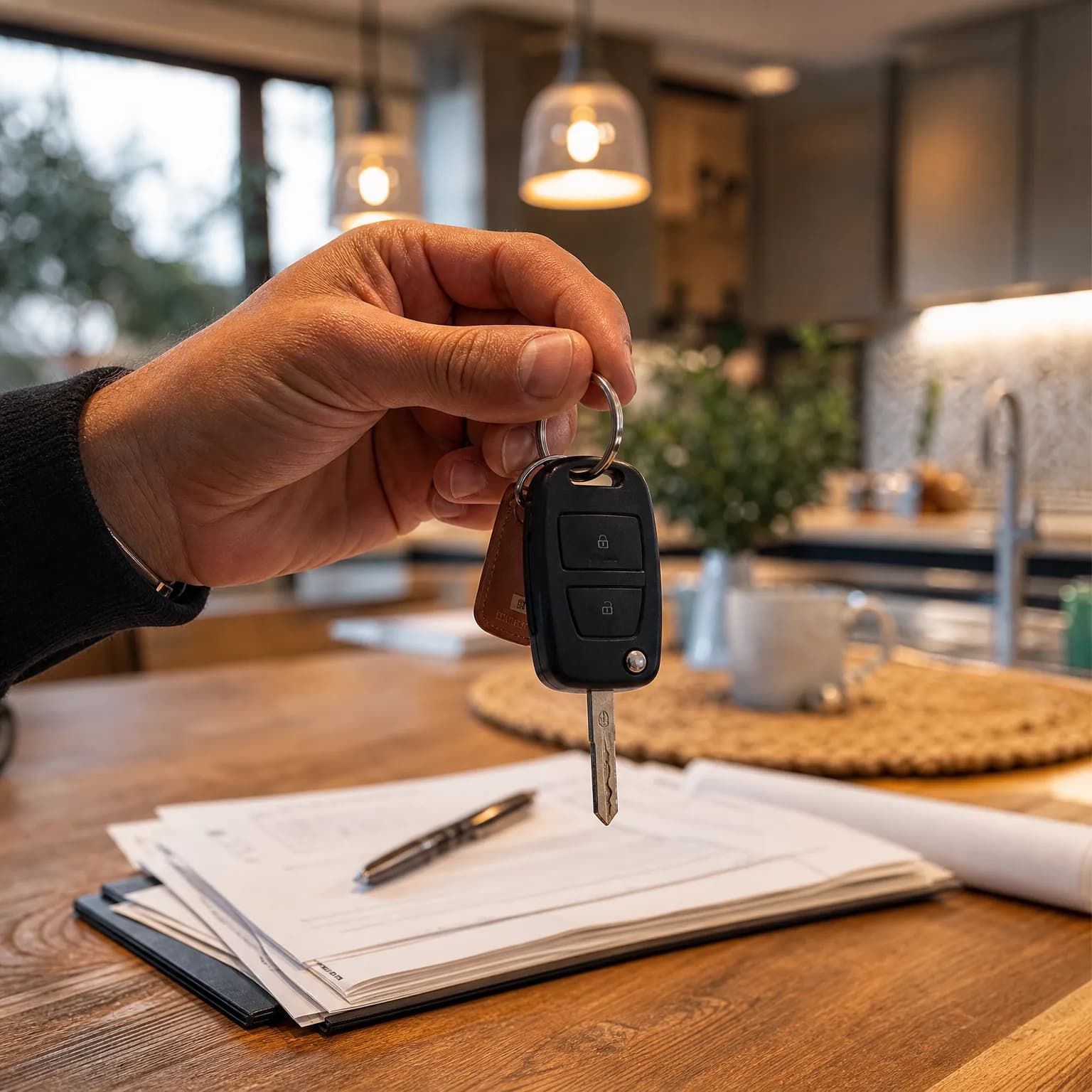
When you buy a car and add it to your existing Iowa policy mid-term, the carrier re-rates the entire policy from the date you add the vehicle. You do not simply pay a prorated amount for the new car. Both the new vehicle and the existing vehicles are priced together under the updated policy structure, and the multi-car discount is recalculated.
Most Iowa carriers provide a grace period — typically 14 to 30 days — during which a newly purchased vehicle is automatically covered under your existing policy at the same coverage levels as your other cars. You must report the vehicle within that window. If you miss the deadline and file a claim on the unreported car, the carrier can deny coverage. The grace period does not extend your billing cycle; once you report the vehicle, the policy re-rates immediately and you owe the additional premium from the date of purchase.
If you add a vehicle and your premium increases more than expected, the cause is usually the re-rating of the entire policy, not just the cost of the new car. The carrier recalculates risk for all vehicles and all drivers in the household. If the new car is assigned to a young or high-risk driver, that assignment affects the whole policy's rate structure. Switching the driver assignment or adjusting coverage levels on the new vehicle can reduce the total increase, but you cannot isolate the new car's cost from the rest of the policy.
11.4%
Iowa Uninsured Motorist Rate
More than one in ten Iowa drivers carry no insurance. Uninsured motorist coverage protects your household when an at-fault driver cannot pay for damage to your vehicles or injuries to your passengers. It is optional in Iowa but recommended for multi-vehicle households.
Insurance Information Institute, 2023
Which Iowa Carriers Write Multi-Vehicle Policies
Twenty-one carriers write auto insurance in Iowa, and most offer multi-car discounts. State Farm, Geico, Progressive, Allstate, Farmers, and Nationwide all write policies for households insuring two or more vehicles. American Family and Auto-Owners are regional carriers with strong Iowa presence and competitive multi-vehicle pricing. USAA writes for military-affiliated households and offers multi-car discounts to eligible members.
Carrier pricing for multi-vehicle policies varies significantly. A household that gets the lowest quote from one carrier for a single vehicle may not get the lowest quote from that same carrier when adding a second or third car. The multi-car discount structure, the base rate for each vehicle, and the way the carrier assigns drivers to vehicles all affect the total premium. You must compare quotes from at least three carriers, and you must provide accurate information about every vehicle and every driver in the household — partial information produces inaccurate quotes.
Compare Carriers Writing Your Household's Vehicles
Iowa law requires proof of financial responsibility to register a vehicle. Most drivers meet this requirement by carrying liability insurance at or above the state minimum. When you insure multiple vehicles, you need a carrier that writes policies for your household structure — the number of vehicles, the drivers assigned to each, and the garaging address. Not every carrier prices multi-vehicle households the same way, and the carrier that offers the lowest rate for one household may not offer the lowest rate for yours.
Use the comparison tool on this site to request quotes from carriers writing in Iowa. Provide accurate information about every vehicle you own and every driver in your household. The quotes you receive will reflect the multi-car discount and the policy structure that applies to your situation. Compare coverage levels, deductibles, and total premium across carriers before you decide.
What Drives Cost Differences Across Iowa Households
Your household's total premium depends on the number of vehicles, the drivers assigned to each, the coverage levels you select, and the garaging ZIP code. Iowa is a fault state, so liability coverage pays for damage you cause to others. The state minimum is $20,000 per person and $40,000 per accident for bodily injury, plus $15,000 for property damage.
Collision and comprehensive coverage are optional, but lenders require them if you finance or lease any vehicle in the household. Deductibles are set per vehicle, not per policy. A household with three cars can choose a $500 deductible on one and a $1,000 deductible on the others. Dropping collision and comprehensive on an older vehicle with low market value is a common cost-reduction strategy for multi-car households, but you must evaluate each vehicle individually — the decision is not policy-wide.
Get Your Free Quote
Get My Iowa Car Insurance QuoteFrequently Asked Questions
How much does car insurance cost in Iowa for two vehicles?
Iowa drivers pay an average of $72 per month per vehicle, but this baseline reflects single-vehicle policies. When you insure two vehicles on one policy, the multi-car discount reduces the combined premium, and the total cost depends on the vehicles, drivers, coverage levels, and garaging ZIP code. Compare quotes from multiple carriers to see what your household pays.
Does Iowa require uninsured motorist coverage?
No. Iowa does not mandate uninsured motorist coverage, but 11.4% of Iowa drivers carry no insurance. Uninsured motorist coverage pays for damage to your vehicles and injuries to your passengers when an at-fault driver cannot pay. It is optional but recommended for households insuring multiple vehicles.
What is the multi-car discount in Iowa?
The multi-car discount is a policy-level reduction applied when you insure two or more vehicles on the same policy. Most Iowa carriers require every vehicle to sit on one policy and share a garaging address for the discount to apply. The discount structure varies by carrier, and you must compare quotes to see the actual savings for your household.
How does adding a third car to my Iowa policy change my premium?
Adding a third car triggers a full policy re-rating. The carrier recalculates the premium for all three vehicles together, applies the multi-car discount to the combined total, and bills you from the date you add the vehicle. The incremental cost of the third car is not simply one-third of your current premium — it depends on the vehicle, the driver assigned to it, and how the carrier structures the discount.
Can I insure two cars on separate policies in Iowa?
Yes, but you lose the multi-car discount. Most Iowa carriers require every vehicle to sit on one policy for the discount to apply. Insuring two cars on separate policies means you pay the full single-vehicle rate for each, with no policy-level reduction. Combining them under one policy almost always costs less.
What happens if I add a car to my Iowa policy and miss the grace period?
If you buy a car and do not report it to your carrier within the grace period — typically 14 to 30 days — the vehicle is not covered. If you file a claim on the unreported car, the carrier can deny it. Report new vehicles immediately to avoid coverage gaps.