
Car Insurance When Moving to Iowa — New Resident Requirements
Free to compare
The 30-Day Window for New Iowa Residents
You moved to Iowa with two or more vehicles. Your out-of-state insurance is still active, your registration is still valid in your former state, and you need to know exactly when Iowa law requires you to make the switch. The answer: 30 days from the date you establish residency. Iowa law requires new residents to register their vehicles and obtain Iowa insurance within that window. Miss it, and you risk driving uninsured under Iowa law even if your old policy is still active.
The complication for households with multiple vehicles: the multi-car discount applies only when every vehicle sits on the same Iowa policy, and most carriers require all vehicles to be added in the same policy term to qualify. If you transfer one car this week and the second car next month, you may lose the discount on both. The 30-day deadline creates pressure, but the sequencing of how you add vehicles to your new Iowa policy determines whether you keep the multi-car savings or pay full rate for each car separately.
“The multi-car discount applies only when all household vehicles transfer to the same Iowa policy in the same term.”

Compare Iowa Car Insurance Quotes Today
Get My Iowa Car Insurance Quote$20,000 / $40,000 / $15,000
Iowa Minimum Liability Limits
Iowa requires $20,000 bodily injury per person, $40,000 bodily injury per accident, and $15,000 property damage. These are the floor amounts to legally register and drive. Most households with multiple vehicles carry higher limits to protect household assets across all cars.
Iowa Code Chapter 321A
What Iowa Actually Requires When You Move In
Iowa does not require you to cancel your out-of-state insurance the moment you cross the state line. The 30-day clock starts when you establish residency: when you sign a lease, buy a home, register to vote, or take a job in Iowa. Once that clock starts, you have 30 days to register each vehicle with the Iowa Department of Transportation and provide proof of Iowa insurance that meets the state's minimum liability limits.
Your out-of-state policy does not satisfy Iowa's proof-of-insurance requirement once you are a resident. Even if your old carrier writes policies in Iowa, your policy is still tied to your former state's rating territory, coverage rules, and registration. You need an Iowa policy, issued under Iowa rules, with Iowa coverage limits, to register your vehicles here.
For households with multiple vehicles, this creates a structural decision: do you transfer all vehicles to one Iowa policy at once, or do you move them one at a time as each registration comes due? The first approach preserves the multi-car discount. The second approach risks losing it entirely, because most carriers require all vehicles to be added in the same term to qualify for the multi-vehicle rate reduction.

The multi-car discount requires every household vehicle on the same Iowa policy, added in the same term. Staggering vehicle transfers across multiple policy terms usually forfeits the discount.





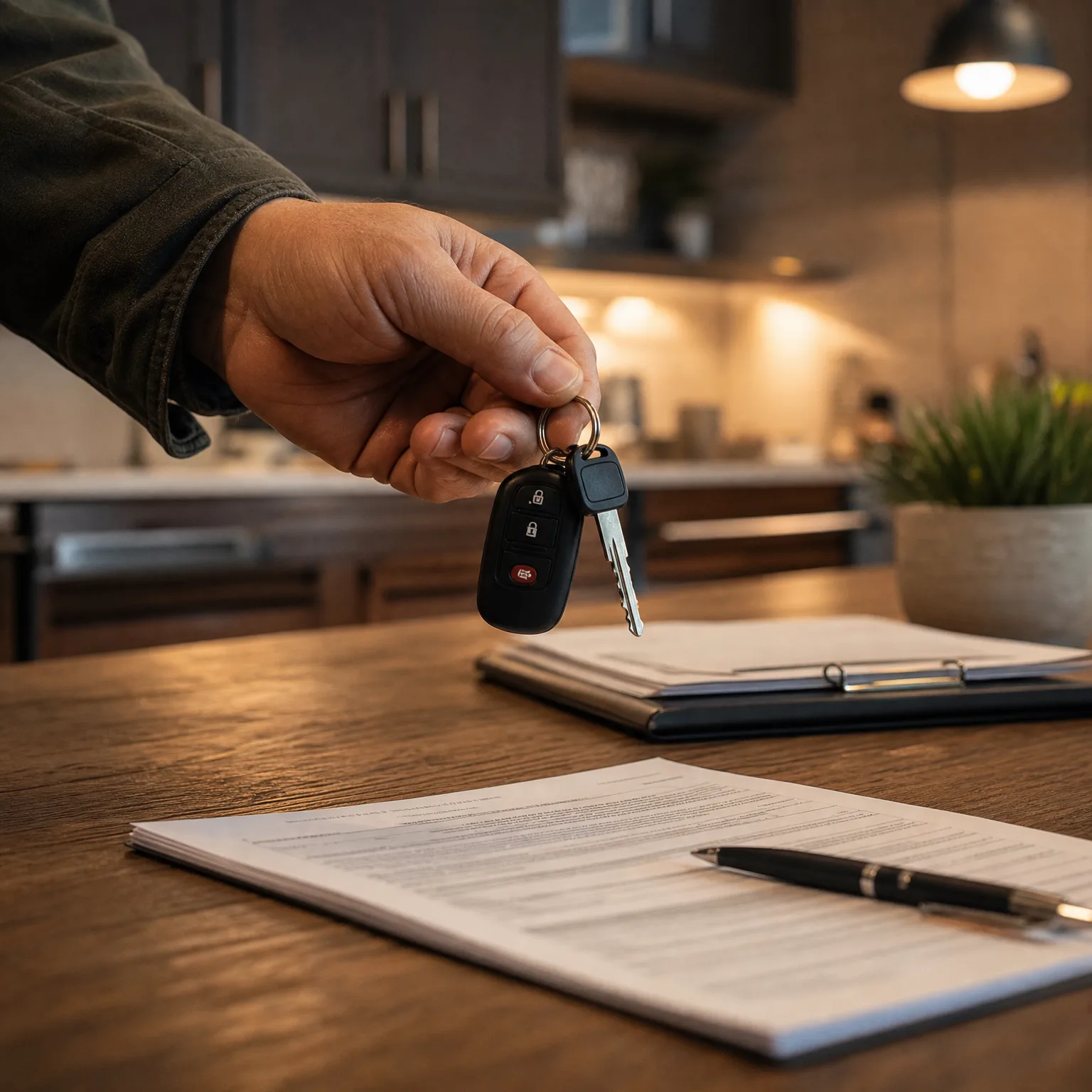

What Happens If You Transfer One Car First
Some households transfer one vehicle to an Iowa policy immediately and plan to add the second or third car later, assuming the multi-car discount will apply retroactively once all vehicles sit on the same policy. It does not work that way. Most carriers calculate the multi-car discount at the time you bind the policy. If you bind a policy with one vehicle, you pay the single-vehicle rate. When you add the second vehicle 30 days later, the carrier re-rates the policy, and the multi-car discount may apply going forward, but you have already paid the higher single-vehicle premium for the first term.
Worse, some carriers treat mid-term vehicle additions as policy changes that reset the term, which can trigger a new set of fees, a different effective date, and a recalculation of the premium that does not credit the earlier payment. The result: you pay more overall than if you had added all vehicles at once from the start.
The structural reality: the multi-car discount is a same-policy, same-term product. Adding vehicles sequentially across multiple terms or multiple policies forfeits the discount, even if all vehicles eventually land on one policy. The only reliable path to preserve the discount is to quote and bind all household vehicles on one Iowa policy before you register any of them.
24 carriers
Iowa Multi-Car Policy Carriers
Iowa has 24 carriers writing auto insurance for households with multiple vehicles, including State Farm, Geico, Progressive, Allstate, and Farmers. Not all carriers offer the same multi-car discount structure. Compare quotes from at least three carriers to find the policy that prices your household's vehicles most competitively.
Iowa Insurance Division licensed carrier roster

Combining Policies After Marriage or a Household Move
If you moved to Iowa with a spouse or partner who already has an Iowa policy, or if you are combining two out-of-state policies into one Iowa policy, the same same-policy same-term rule applies. Contact the carrier and request a quote for all household vehicles on one policy. The carrier will re-rate the entire policy based on the combined risk of all drivers and all vehicles. In most cases, combining two policies into one lowers the total premium, because the multi-car discount outweighs the added risk of the second driver. But not always.
Some carriers price a two-driver, three-vehicle household higher than two separate one-driver policies, particularly when one driver has a recent violation or a young driver on the policy. The only way to know: quote both structures and compare the total annual premium. If combining policies costs more, keep the policies separate until the next renewal, then re-quote. Carriers re-rate policies at every renewal, and the math changes as violations age off and drivers gain experience.
What to Do Right Now
Identify the date you established Iowa residency. Count forward 30 days. That is your registration deadline. Before that deadline, obtain quotes from at least three Iowa carriers for all household vehicles on one policy. Verify the multi-car discount appears on each quote. Bind the policy that offers the lowest total annual premium, then register all vehicles using the new Iowa policy as proof of insurance. If you are combining two existing policies, quote both the combined structure and the separate-policy structure to confirm which costs less. The 30-day window is tight, but the sequencing decision you make inside that window determines whether you keep the multi-car discount or pay single-vehicle rates for the next six months.
How to Transfer Multiple Vehicles Without Losing the Discount
Contact carriers that write multi-car policies in Iowa and request quotes for all household vehicles on one policy. Provide the VIN, current mileage, and garaging address for each car. The carrier will rate the policy based on Iowa territory, Iowa coverage rules, and the combined risk of all vehicles. Most carriers apply the multi-car discount automatically when you quote two or more vehicles on the same policy. Verify the discount appears on the quote before binding coverage.
Once you select a carrier and bind the Iowa policy, you receive proof-of-insurance cards for each vehicle. Take those cards, along with the vehicle titles, current registration, and odometer disclosure, to your county treasurer's office to register each vehicle. Iowa allows you to register all household vehicles at once or stagger the registration appointments across the 30-day window, as long as the insurance policy covers all vehicles from day one. Staggering registration does not affect the multi-car discount, because the discount applies at the policy level, not the registration level.
Get Your Free Quote
Get My Iowa Car Insurance QuoteFrequently Asked Questions
Can I keep my out-of-state insurance after moving to Iowa?
No. Iowa requires new residents to obtain Iowa insurance within 30 days of establishing residency. Your out-of-state policy does not satisfy Iowa's proof-of-insurance requirement once you are a resident, even if the same carrier writes policies in Iowa.
Do I have to register all my vehicles at the same time?
No. Iowa allows you to register household vehicles on different days within the 30-day window. However, your Iowa insurance policy must cover all vehicles from day one to preserve the multi-car discount. Staggering registration does not affect the discount as long as all vehicles sit on the same policy from the start.
What happens if I add a second car to my Iowa policy mid-term?
Most carriers re-rate the policy when you add a vehicle mid-term. The multi-car discount may apply going forward, but you have already paid the single-vehicle rate for the first term. Adding all vehicles at once when you bind the policy avoids paying the higher single-vehicle premium.
Does combining two policies into one always save money?
No. In most cases, combining two policies into one Iowa policy lowers the total premium because the multi-car discount outweighs the added risk. But some carriers price a two-driver, three-vehicle household higher than two separate policies, particularly when one driver has a recent violation. Quote both structures to confirm which costs less.
How long does the multi-car discount last in Iowa?
The multi-car discount applies for as long as all household vehicles remain on the same Iowa policy. If you remove a vehicle or split the policy, the discount recalculates or disappears. Carriers re-rate the policy at every renewal, so the discount amount may change as your household's vehicles and drivers change.