
Multi-Car Coverage Requirements — Iowa
Free to compare
When Every Car Must Meet Iowa's Liability Floor
You own two cars, or three, or your household just added a vehicle, and you're confirming whether Iowa's minimum liability requirements apply to each car individually or to the policy as a whole. The structural reality: Iowa Code requires every registered vehicle to carry at least $20,000 bodily injury per person, $40,000 bodily injury per accident, and $15,000 property damage. A multi-car policy does not pool these limits across vehicles — each car on the policy must independently satisfy the state floor.
This matters when you're deciding whether to add a newly-purchased car to an existing policy, combine two separate policies after a household change, or drop a vehicle mid-term. The per-vehicle compliance rule means adding a car triggers a policy re-rating that applies Iowa's minimums to the new vehicle, and removing a car does not reduce your obligation to maintain coverage on the remaining vehicles. Understanding how Iowa structures multi-vehicle liability is the first step toward building a compliant, cost-effective policy for your household.
“Iowa requires every registered vehicle to carry $20,000/$40,000/$15,000 liability individually — a multi-car policy does not pool limits across vehicles.”

Compare Iowa Car Insurance Quotes Today
Get My Iowa Car Insurance Quote$20,000/$40,000/$15,000
Iowa Minimum Liability Per Vehicle
Every car registered in Iowa must carry at least $20,000 bodily injury per person, $40,000 bodily injury per accident, and $15,000 property damage. A multi-car policy applies these limits to each vehicle individually, not as a pooled total across the policy.
Iowa Code Chapter 321A
How Multi-Car Policies Apply State Minimums
A multi-car policy in Iowa covers two or more vehicles under one policy number, typically issued to a single named insured or household. Each vehicle listed on the policy receives its own liability coverage that meets or exceeds Iowa's $20,000/$40,000/$15,000 floor. The policy does not aggregate limits across cars — if you carry minimum coverage on three vehicles, each car has its own $20,000 per-person bodily injury limit, and a claim involving one vehicle does not reduce the limits available to the others.
This structure means adding a vehicle to an existing policy requires the carrier to extend liability coverage to the new car at the state minimum or higher. The carrier re-rates the policy to account for the additional vehicle, applying underwriting factors specific to that car: the make, model, year, garaging address, primary driver, and how the vehicle is used. The re-rating is not a simple per-vehicle surcharge — it recalculates the entire policy premium based on the new vehicle count and risk profile.
When you combine two separate policies into one multi-car policy — for example, after marriage or when a household member moves in with a car — the combined policy must still meet Iowa's per-vehicle minimums. The carrier underwrites the combined household as a single risk, which often produces a lower total premium than two separate policies, but the per-car liability floor does not change. Each vehicle on the combined policy carries its own $20,000/$40,000/$15,000 liability coverage.
The multi-car discount most carriers offer applies when you insure two or more vehicles on the same policy. The discount typically reduces the premium for each vehicle after the first, but it does not reduce the coverage required — every car still meets Iowa's minimums. The discount amount and eligibility rules vary by carrier; some require all vehicles to be garaged at the same address, others allow different garaging locations within the same household.

Adding a vehicle mid-term re-rates your entire policy based on the new vehicle count and household risk profile, not just the cost of insuring the added car.






Adding a Vehicle Mid-Term and Coverage Timing
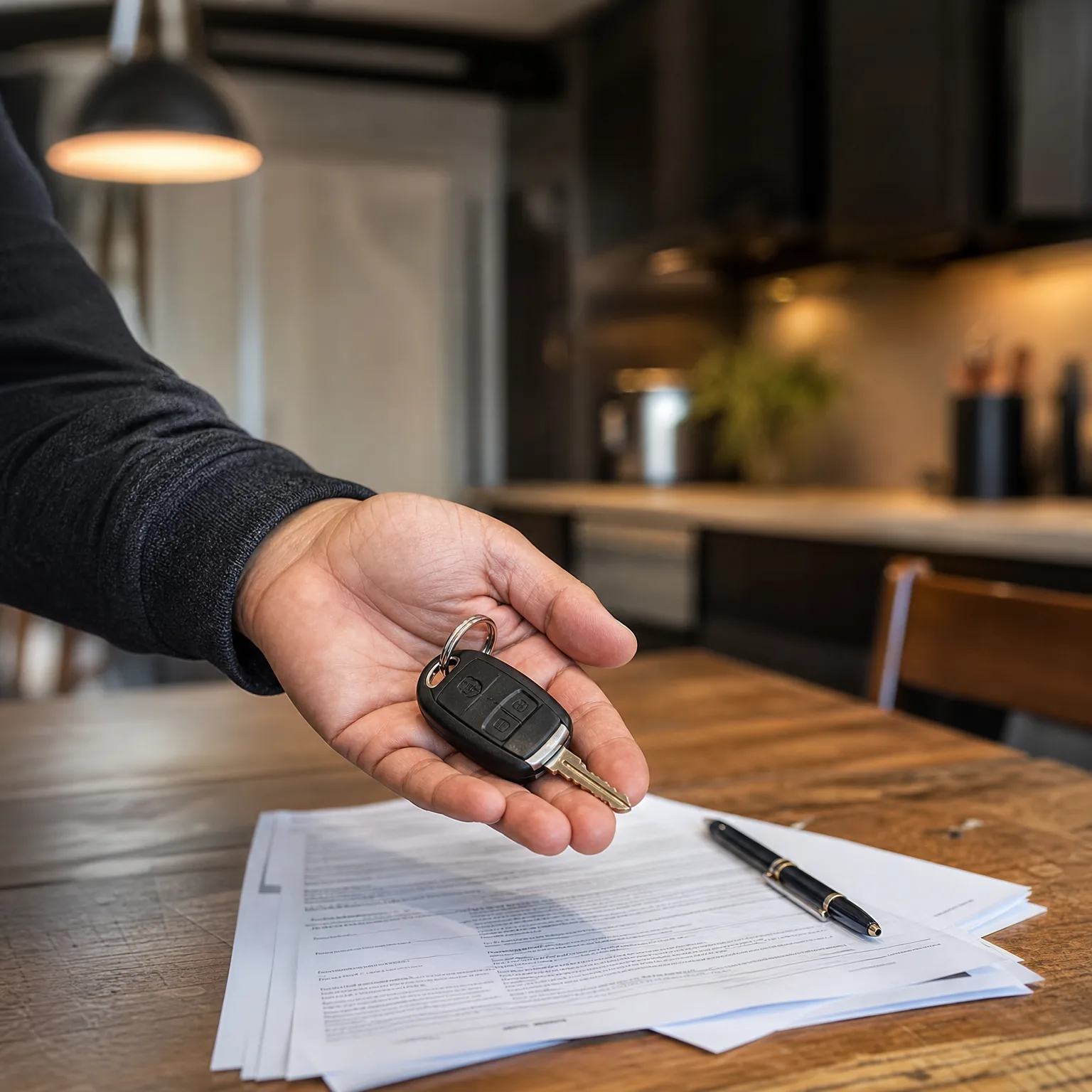
Iowa law requires proof of financial responsibility at the time of vehicle registration. When you buy a car, you must provide proof of insurance that meets Iowa's minimums before the county treasurer will issue registration. Most carriers extend automatic coverage to a newly-acquired vehicle for a limited grace period — typically 14 to 30 days — if you already insure at least one vehicle with that carrier. The grace period allows you to complete the purchase and registration without a coverage gap, but you must formally add the new vehicle to your policy within the grace window.
Failing to add the vehicle within the grace period can result in the carrier retroactively denying coverage for the new car, leaving you uninsured if a claim occurs. The grace period is not a substitute for adding the vehicle — it is a temporary extension that assumes you will notify the carrier promptly. When you add the vehicle, the carrier re-rates the policy effective the date you acquired the car, and you owe the additional premium from that date forward, not from the date you notified the carrier.
If you're adding a vehicle to a policy that already covers multiple cars, the re-rating applies to the entire policy. The carrier recalculates the premium based on the new vehicle count, the added car's risk profile, and any multi-car discount adjustments. The result is a new total premium for the policy term, prorated from the date the vehicle was added. This is different from simply adding a flat per-vehicle charge — the entire household risk is re-evaluated.
2,354,046
Licensed Drivers in Iowa
Iowa has over 2.3 million licensed drivers and 3.78 million registered vehicles, meaning many households insure more than one car. The state's per-vehicle liability requirement applies to every registered vehicle regardless of how many drivers are in the household.
Federal Highway Administration, 2022

When Separate Policies Make Sense
Not every multi-vehicle household benefits from a single combined policy. Separate policies can be the better structure when drivers have significantly different risk profiles, when vehicles are garaged at different addresses outside the same household, or when one vehicle is used commercially and the others are personal-use only. A household with a teen driver, for example, may find that insuring the teen's car on a separate policy isolates the high-risk premium to that vehicle, rather than raising the rate for every car on a combined policy.
Separate policies also make sense when one vehicle is rarely driven and qualifies for a low-mileage or storage policy, while the other vehicles are daily drivers. Combining a rarely-driven classic car with two daily commuters on one policy forces the classic into the same underwriting tier as the high-use vehicles, often costing more than a standalone collector or storage policy for the classic and a standard multi-car policy for the daily drivers.
Compare Carriers That Write Multi-Car Policies in Iowa
Iowa has a competitive auto insurance market with multiple carriers writing multi-car policies. Carriers that write standard and preferred-tier multi-vehicle policies in Iowa include State Farm, Allstate, American Family, Geico, Progressive, Farmers, Nationwide, Liberty Mutual, and Travelers. Non-standard carriers including Bristol West, Dairyland, National General, and The General also write multi-car policies for households with higher-risk drivers or vehicles. Each carrier applies its own underwriting rules, multi-car discount structure, and premium calculation, so quotes for the same household and vehicles can vary significantly.
When comparing carriers, request quotes that cover all vehicles and drivers in your household at Iowa's minimum liability limits, then request quotes at higher limits to see how the premium scales. The multi-car discount percentage also varies — one carrier's 15 percent discount on a higher base rate can cost more than another carrier's 10 percent discount on a lower base, so compare total annual premiums rather than discount percentages alone.
Combining Policies After a Household Change
Combining policies typically lowers the total premium because carriers apply the multi-car discount and consolidate administrative overhead. However, combining is not always the better financial outcome. If one driver has a significantly worse driving record — multiple violations, an at-fault accident, or a recent DUI — adding that driver and their vehicle to a clean policy can increase the premium for both cars more than the multi-car discount saves. Carriers underwrite the combined household as a single risk, and a high-risk driver raises the rate for every vehicle on the policy.
The decision depends on the household's specific situation. Request quotes for both scenarios: a combined multi-car policy covering all vehicles and drivers, and separate policies for each driver. Compare the total annual premium, the per-vehicle coverage limits, and whether both structures meet Iowa's $20,000/$40,000/$15,000 minimums. If the combined policy costs less and provides equivalent or better coverage, combining makes sense. If the separate-policy total is lower, keep them separate until the high-risk driver's record improves.
Get Your Free Quote
Get My Iowa Car Insurance QuoteFrequently Asked Questions
Does Iowa require the same liability coverage on every car I own?
Yes. Iowa requires every registered vehicle to carry at least $20,000 bodily injury per person, $40,000 bodily injury per accident, and $15,000 property damage. A multi-car policy applies these minimums to each vehicle individually, not as a pooled total across the policy.
Can I insure multiple cars on one policy in Iowa?
Yes. Most carriers in Iowa offer multi-car policies that cover two or more vehicles under one policy number. Each vehicle on the policy must meet Iowa's $20,000/$40,000/$15,000 minimum liability requirement, and carriers typically apply a multi-car discount when you insure multiple vehicles together.
What happens to my Iowa auto insurance when I add a second car?
When you add a vehicle to an existing Iowa auto policy, the carrier re-rates the entire policy based on the new vehicle count and the added car's risk profile. The re-rating is effective from the date you acquired the vehicle, and you owe the additional premium from that date forward, prorated through the end of the policy term.
Should I combine two auto policies into one multi-car policy in Iowa?
Combining policies typically lowers the total premium due to the multi-car discount, but not always. If one driver has a significantly worse driving record, adding that driver to a clean policy can raise the premium for all vehicles more than the discount saves. Request quotes for both combined and separate scenarios to compare total annual cost.
How long do I have to add a newly-purchased car to my Iowa auto policy?
Most carriers extend automatic coverage to a newly-acquired vehicle for 14 to 30 days if you already insure at least one vehicle with that carrier. You must formally add the new vehicle within that grace period, or the carrier may retroactively deny coverage for the new car.
Do all vehicles on a multi-car policy in Iowa need to be garaged at the same address?
Not always. Some carriers require all vehicles on a multi-car policy to be garaged at the same address to qualify for the multi-car discount, while others allow different garaging locations within the same household. Check with your carrier for their specific policy rules.