
The Deductible Decision Changes With Multiple Vehicles
You're looking at your Iowa auto policy renewal and weighing whether to raise deductibles on collision and comprehensive coverage. The premium difference looks appealing. But you insure three vehicles on one policy, and the math changes when deductibles apply per vehicle, per incident.
A single-car household choosing between a $500 and $1,000 deductible faces one exposure point. A three-car household choosing the same deductible across all vehicles faces three. If two of those cars are damaged in the same storm or parking-lot incident, you pay the deductible twice. The savings you banked over twelve months can evaporate in one claim.
Compare car insurance rates in your state
Get quotes from licensed carriers — no obligation, no spam, results in minutes.
Get Your Free QuoteIowa Minimum Liability Limits
$20,000 / $40,000 / $15,000
Iowa requires $20,000 bodily injury per person, $40,000 per accident, and $15,000 property damage. These minimums do not include collision or comprehensive coverage, where deductibles apply.
Iowa Code § 321A.21
Deductibles Apply Per Vehicle, Per Incident
Collision and comprehensive deductibles are per-vehicle, per-occurrence charges. If hail damages two cars parked in your driveway, you pay two comprehensive deductibles. If you rear-end another vehicle and your teenage driver rear-ends a third car the same week, you pay two collision deductibles.
The policy does not cap total deductible exposure across vehicles in a single event. Each car on the policy carries its own deductible obligation. Households with three or four vehicles face compounded out-of-pocket costs when multiple cars are involved in the same incident or when separate claims occur close together.
This structure makes high deductibles riskier for multi-car policies than for single-car policies. A $1,000 deductible on one vehicle means $1,000 maximum exposure per incident.
Your deductible savings are annual; your deductible exposure is per vehicle, per claim. One multi-car incident can erase years of premium reduction.
How Deductible Choices Interact With Coverage Decisions
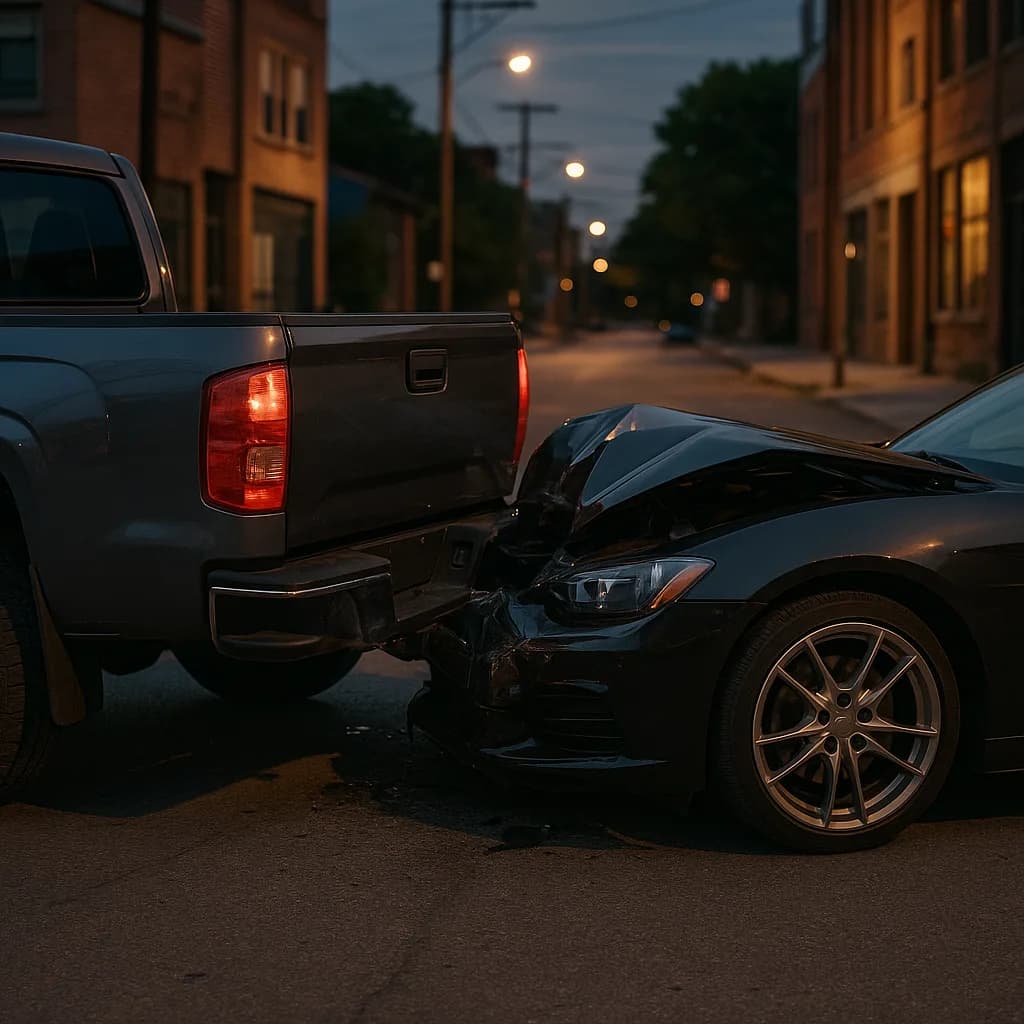
Collision coverage pays for damage to your vehicle after an at-fault accident, minus your deductible. Comprehensive coverage pays for non-collision damage such as theft, hail, or hitting a deer, minus your deductible. Both are optional under Iowa law, but lenders require them on financed vehicles. Households with older paid-off vehicles often drop collision and comprehensive entirely to eliminate both the premium and the deductible exposure.
Raising deductibles lowers premiums on both coverages, but the savings vary by vehicle value and driver profile. Multiply that across three vehicles and the annual savings can justify the higher out-of-pocket risk, but only if claims remain infrequent.
Related Articles



When Higher Deductibles Make Sense for Multi-Car Households
Higher deductibles work best when your household can absorb the compounded exposure and when claim frequency is low.
The savings accumulate over time. That cushion covers one or two deductibles if a claim eventually occurs. Households with emergency savings equal to the total deductible exposure across all vehicles are better positioned to choose higher deductibles without financial strain.
Conversely, households with teen drivers, vehicles parked on-street in high-density areas, or a history of frequent small claims face higher risk of multiple deductible payments in a short period. In those situations, lower deductibles reduce per-incident costs even though premiums run higher.
Iowa Vehicle Theft Rate
137.1 per 100,000
Iowa recorded 137.1 motor vehicle thefts per 100,000 population in 2024. Comprehensive coverage with a deductible applies to theft claims, and multi-car households with vehicles parked in different locations face independent theft exposure per vehicle.
Iowa Uniform Crime Reporting Program, 2024
Structuring Deductibles Across Different Vehicles
Most Iowa carriers allow different deductibles on different vehicles within the same policy. You can assign a $500 deductible to the vehicle your teen drives and a $1,000 deductible to the vehicle you drive. This approach tailors risk to driver profile and vehicle use.
Newer financed vehicles often carry lower deductibles because the loan balance exceeds the vehicle's post-accident value, and a high deductible can leave you owing more than the insurance payout. Older paid-off vehicles with lower replacement costs can carry higher deductibles or drop collision and comprehensive entirely. Structuring deductibles this way balances premium savings with exposure management across the household fleet.
Compare Carriers That Write Multi-Vehicle Policies in Iowa
Deductible pricing varies by carrier. When you multiply that difference across three or four vehicles, carrier choice becomes as important as deductible choice.
Iowa licenses multiple carriers that write multi-car policies, including State Farm, Geico, Progressive, Allstate, Nationwide, and Farmers. Each prices deductibles differently based on vehicle value, driver age, garaging location, and claim history. Compare quotes with identical coverage limits and different deductible combinations to see which carrier offers the best balance of premium savings and manageable exposure for your household.